What Is a Zettelkasten? A Beginner's Guide to Linked Note Taking
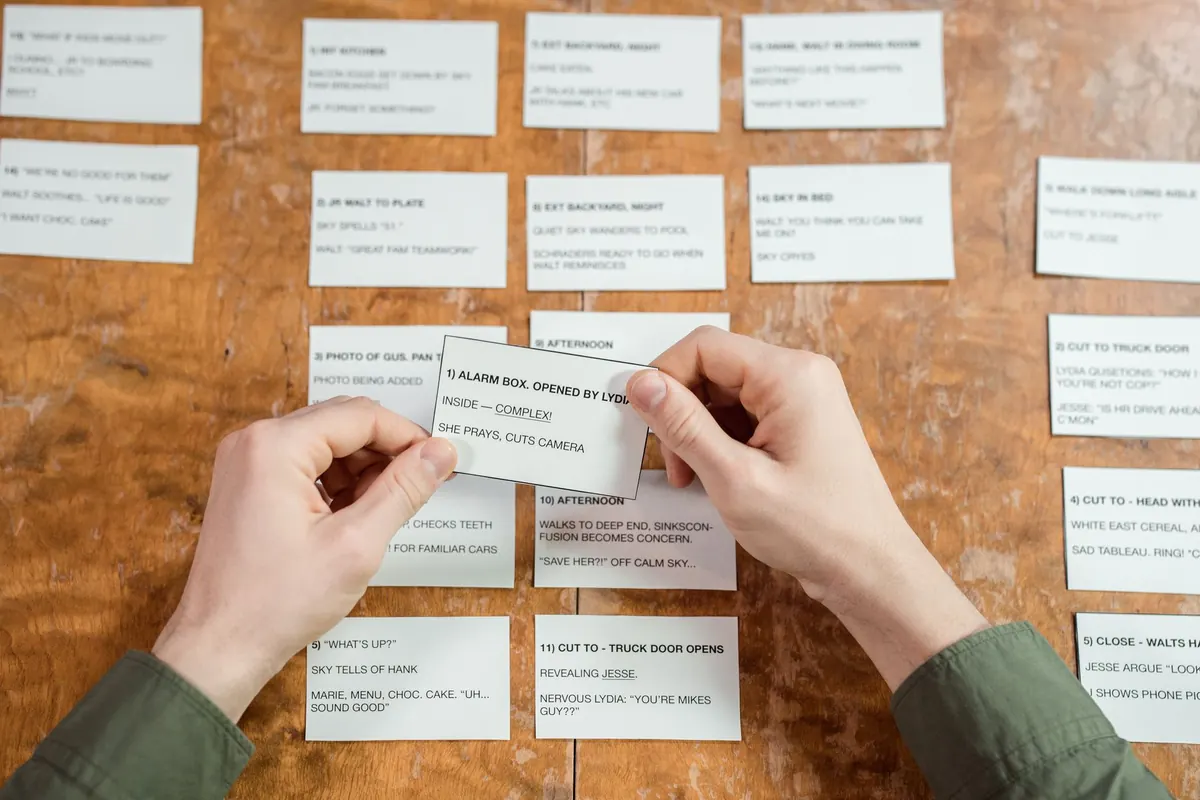
You have notes somewhere. A notebook, a folder of documents, a phone full of half-finished thoughts. Capturing ideas is rarely the problem. Finding them again — and finding them next to the other ideas they belong with — is where most systems fall apart.
A Zettelkasten, German for "slip box", solves that by refusing to file anything in one place. Instead of sorting notes into folders, you write small notes and link them to each other. The links, not the folders, do the organising.
Where the slip box came from
The method is usually traced to Niklas Luhmann, a German sociologist who built his working life around a card index of tens of thousands of notes. He published at a rate that puzzled his colleagues, and the box is often given much of the credit.
The interesting part isn't the size. It's that Luhmann treated the box as a correspondent rather than a filing cabinet. He would follow a thought into the cards, find a note he had forgotten writing, and answer it. That is what a working Zettelkasten feels like: not an archive of what you have read, but a place where your reading starts arguing with itself.
Atomic notes: one idea per note
Everything rests on one rule. Each note holds a single idea.
That sounds fussy until you try it. Suppose you are reading a book about editing and you come across a useful point about sentence openings. The instinct is to write "Chapter 3 — good stuff about openings" and move on. A Zettelkasten note looks different. It says something like: a sentence usually improves when you cut its first three words; the real subject is often hiding behind a warm-up phrase.
That is a claim. You can agree with it, argue with it, test it on your own work, and link it to a note about concision you wrote six months ago from a completely unrelated source.
Write in your own words, in full sentences, two to five of them. If you copy a passage, you have stored a quotation; you have not yet had a thought. The test of a good atomic note is that it still makes sense to you in a year, standing alone, with no context around it.
Links are the point
Folders force a decision you can only make once. A note about pacing in thrillers might belong under craft, under genre, or in a project folder. Pick one and you have hidden it from the other two. Links let a note live in several conversations at once.
Linking well is a skill. "See also" is almost useless, because future-you will not know why the two notes were connected. Write the connecting sentence instead:
This is the same problem the note on dialogue tags describes, but at the level of the paragraph.
That sentence is often where an article starts. You have just written a piece of your own thinking, and it is sitting in the box waiting to be used.
Most people also keep a few structure notes: one note per theme or project that lists and orders the other notes. Treat these as tables of contents you can rewrite, not as categories.
Three kinds of note
Mixing these up is the most common reason a Zettelkasten collapses.
- Fleeting notes. Scraps captured during the day — a line overheard on the train, a question that will not leave you alone. Keep them anywhere, and clear them within a day or two.
- Literature notes. Short summaries of a source, in your own words, with enough detail to find the passage again. They live beside the source, not in the box.
- Permanent notes. The atomic, linked notes described above. This is the Zettelkasten proper: the place you think in.
The discipline sits in the middle step. A literature note is a way station. If it never becomes a permanent note, the reading stays locked inside the book.
A simple setup for writers
You do not need special software. Plain text files in a folder will work. Some writers use Obsidian, Zettlr or Logseq for the linking; others use index cards and a shoebox. The tool matters far less than the habit, so pick the one you will actually open.
- Start with one file per note, titled with the idea itself. "Cut the warm-up phrase" beats "Editing notes 4".
- Write two to five sentences in your own words. No fragments — prose forces you to think.
- Link to at least one existing note. If you cannot find one, that is information: either the idea is new to you, or you have not written enough notes yet.
- Add a line explaining the link, so the connection survives.
- Keep one index note per project, listing the notes that might belong in it.
- Spend ten minutes a week tidying: merging duplicates, adding links, deleting notes that say nothing.
Linking gets easier once the box holds a few dozen notes. Before that, you are mostly writing.
Mistakes worth avoiding
Collecting instead of thinking. A folder of saved articles is not a Zettelkasten. If a source produced no permanent note, it produced nothing.
Endless numbering schemes. You do not need Luhmann's numbering. Search plus links covers almost everything a modern writer needs.
Over-tagging. Twenty tags is a folder structure wearing a disguise. Tags are useful for the handful of themes you genuinely return to.
Impatience. Some notes wait years for a companion. Do not delete a lonely note just because nothing links to it yet — but do notice the ones you never open.
Start with ten notes
Do not rebuild your system this weekend. Take the book or article you are in the middle of, write five atomic notes from it, and link each one to at least one other. Do the same next week. Ten linked notes will teach you more about this method than any guide.
From there, the box starts paying you back. When a commission or an idea arrives, you do not open a blank page — you open the index note for that theme, pull the four or five notes that fit, and put them in an order. The draft is half-written already; your job is to write the sentences between them.
A small box of notes you trust beats a large one you avoid. Twenty good notes is a real Zettelkasten. A thousand clippings is just a pile.
Photo: Ron Lach / Pexels